Orthodox Pathway
Orthodox Baptism: More Than You Think
Orthodox Baptism isn't just about symbolism, or accepting Jesus in your heart; it's much, much more.
ORTHODOX CHURCHCHRISTIANITYBAPTISM
Dr Adelbert Wilber Jr
1/4/20263 min read
Orthodox Baptism: More Than You Think
If you grew up Protestant, you probably think of baptism as an outward sign of an inward decision. If you're an atheist, you might see it as religious theater. Orthodox Christians would say you're both missing something profound.
In the Orthodox Church, baptism isn't a symbol of something that already happened. It is the thing happening. You die. You rise. You become someone you weren't before.
Death and Resurrection
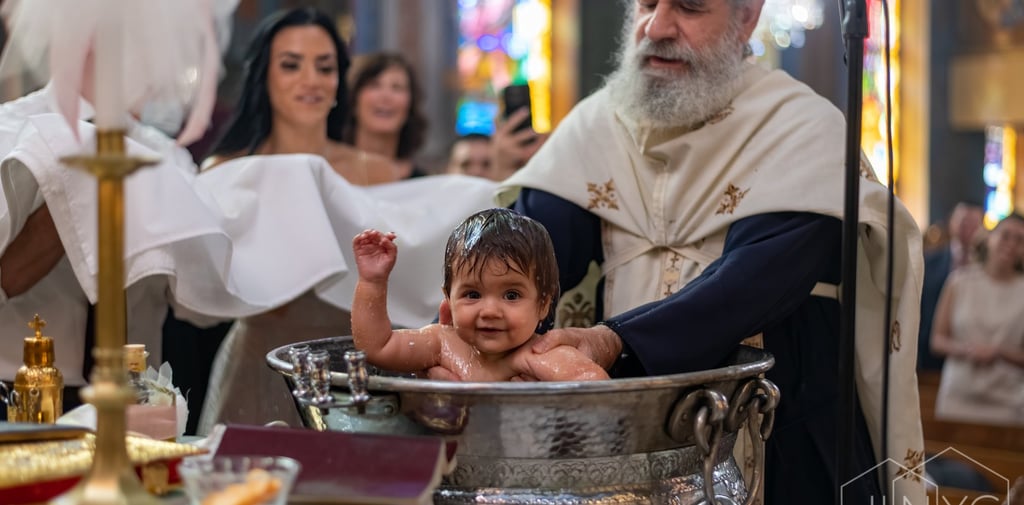
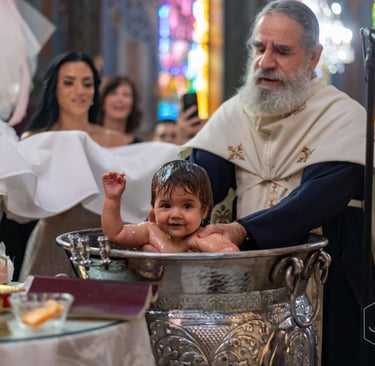
The priest doesn't sprinkle water on your forehead. He plunges you—or in the case of an infant, the entire baby—beneath the water three times. Once for the Father, once for the Son, once for the Holy Spirit. Each immersion echoes Christ's three days in the tomb. Each emergence mirrors His resurrection.
This isn't metaphor. Orthodox theology takes Paul seriously when he writes that in baptism we are "buried with Christ" and "raised to walk in newness of life." The old you goes under. A new creation comes up. The waters are both tomb and womb.
Before You Enter the Water
But death requires preparation. In the early Church, this meant the catechumenate—months or even years of instruction, prayer, and examination. Today, adult converts still undergo this process, learning what it means to renounce the world, the flesh, and the devil.
And that renunciation is literal. Before baptism, the catechumen faces West—the direction of darkness—and formally renounces Satan, spitting to seal the rejection. Then they turn East, toward the light, and pledge themselves to Christ. This isn't filling out a decision card. This is choosing sides in a war.
The Full Initiation
Here's where Orthodoxy diverges sharply from most Western practice: baptism doesn't stand alone. Immediately after emerging from the font, the newly baptized is chrismated—anointed with holy oil, receiving the seal of the Holy Spirit. And then, even if the person is an infant, they receive Holy Communion.
All three sacraments. One event. Full membership in the Body of Christ from day one.
Western Christianity separated these mysteries, spacing them years apart. Orthodoxy kept them together because they belong together. You can't be partially initiated into the Church any more than you can be partially born.
Godparents: More Than Witnesses
The godparent isn't there to give nice birthday presents or offer vague spiritual encouragement. In Orthodox tradition, the godparent is a spiritual guarantor—someone who pledges to guide this person in the faith, to pray for them, to model the Christian life.
For adult converts, the godparent often becomes a mentor in navigating Orthodox worship, fasting, and prayer. For infants, the godparent speaks the baptismal vows on their behalf and accepts responsibility for their spiritual formation. It's a lifelong bond, taken as seriously as the sacrament itself.
The Beginning, Not the End
If you're expecting baptism to be a spiritual finish line, Orthodoxy will disappoint you. The font is where the race begins.
You emerge from those waters with the Holy Spirit, yes. With full membership in the Church, yes. But you also emerge into spiritual warfare. The passions—pride, lust, anger, despair—don't vanish at baptism. The struggle against them starts there.
This is why Orthodoxy speaks of salvation not as a single moment but as a process. You were saved (at baptism), you are being saved (through life in the Church), and you will be saved (if you endure to the end). Baptism opens the narrow path. Walking it is another matter entirely.
Why It Matters
To the atheist reader, this probably sounds like elaborate mythology. To the Protestant, it might seem like works-based salvation or sacramental magic.
But consider: the early Church, the Church of the martyrs and the apostles, did it this way. For nearly two thousand years, Orthodox Christianity has maintained this understanding—that baptism is not primarily about your decision or your faith, but about God's action. His killing of the old you. His raising of the new.
The Orthodox don't ask, "Have you accepted Jesus into your heart?" They ask, "Have you been baptized?" Because baptism is where acceptance happens—where God accepts you, incorporates you, transforms you.
It's not theater. It's not symbolism. It's death, resurrection, and the beginning of a journey that will cost you everything and give you more than you can imagine.
That's what baptism means when you choose the narrow path.
The Question Before You
So what are you going to do with this?
You can dismiss it as ancient superstition, another religious ritual that asks too much and promises what it can't deliver. You can file it away as interesting but irrelevant, something for other people in other times.
Or you can sit with the possibility that two thousand years of Christians—people who faced lions rather than deny what happened to them in those waters—might have known something you don't.
The narrow path doesn't begin with intellectual agreement. It doesn't begin with feeling spiritual or getting your life together first. It begins with a choice—to step into those waters, to let the old life go, to receive what God offers in exchange.
The font is waiting. The question is whether you're ready to step in.